Thanksgiving is the only holiday where the food is predictable, the family stories are predictable, and yet somehow the alcohol runs out at the worst possible moment. The turkey may be dry or perfect, the mashed potatoes may be lumpy or silky, but one thing is certain: by hour 3, someone is asking why there’s no more sparkling wine and whether that old vodka in the cabinet “is still fine.”
It’s not your fault. Thanksgiving isn’t a normal dinner’s a 5 to 8-hour drinking marathon disguised as a family meal, split into three totally different drinking environments. Guests sip while you cook, drink again during dinner, and then drift into coffee-and-nightcap mode long after dessert. No wonder hosts miscalculate every year.
People Google “best alcohol for Thanksgiving,” “how much wine per guest,” or “what liquor goes with turkey” because everyone wants the same thing: a plan that doesn’t collapse at 6 PM when Uncle Mitchell asks if there’s “any more of that bubbly stuff.” They want a guide that matches how real households actually drink on Thanksgiving, not a Pinterest board fantasy.
This guide does exactly that. It blends real consumption data, wine science, guest behavior, hosting psychology, flavor compatibility, and practical holiday strategy. Whether you’re hosting a traditional family Thanksgiving or a modern Friendsgiving.
By the end of this article, you’ll know exactly how much to buy, what to serve, which wines actually pair well, how to structure every drinking window, how to batch cocktails, how to manage non-drinkers, and how to avoid the classic “we ran out” or “why did we buy all this” mistakes.
Why Thanksgiving Drinking Requires Its Own Strategy
Thanksgiving is not a typical dinner. It lasts longer, involves more people, mixes family and friends, and includes long cooking windows, multiple courses, heavy food, and constant sipping. Unlike a standard dinner party, Thanksgiving begins hours before food is served and continues long after dessert is finished.
Thanksgiving is really three separate drinking environments packaged into one holiday.
- Arrival
Guests walk in from the cold, drop off dishes, catch up, and ease into the day. People often drink sparkling wine, light cocktails, cider, or something simple. The pace is slow but steady. - Dinner
The main meal usually lasts 1 hour, sometimes 90 minutes. A Thanksgiving plate includes herbs, salt, fat, sweetness, and acidity, which naturally pushes guests toward wine because it supports these flavors without overpowering them. - Dessert and Evening
After dinner, the pace slows. Some switch to coffee or spirits, some return to sparkling wine, and others move to cider or seltzer.
This three-stage structure is why hosts often miscalculate how much alcohol to buy. They plan only for dinner, even though there are 2 major drinking windows before and after the meal. Understanding this rhythm allows you to build a consumption model that works for any group size.
How Americans Actually Drink on Thanksgiving
A Clear, Data Grounded Breakdown
Thanksgiving drinking patterns have remained unchanged for more than a decade. Industry consumption data from Nielsen, DISCUS, and the Wine Market Council show nearly identical patterns year after year, forming the backbone of this quantity model. The average adult at a holiday gathering drinks about one serving per hour.
Thanksgiving events typically last 4 to 6 hours, sometimes longer if guests arrive early or stay late, but the 4 to 6 hour range is consistently the most common.
Using the one-drink-per-hour average, consumption follows a predictable structure:
• 6 adults need 24–36 servings
• 10 adults need 40–60 servings
• 15 adults need 60–90 servings
• 20 adults need 80–120 servings
Understanding this pattern allows you to avoid the two biggest Thanksgiving hosting mistakes.
- Mistake One: Underbuying wine and running out halfway through dinner.
- Mistake Two: Overbuying spirits and ending up with bottles that sit unused until the next holiday.
With the correct consumption model, you can choose categories with confidence, allocate quantities accurately, and plan a full day of hosting without stress.
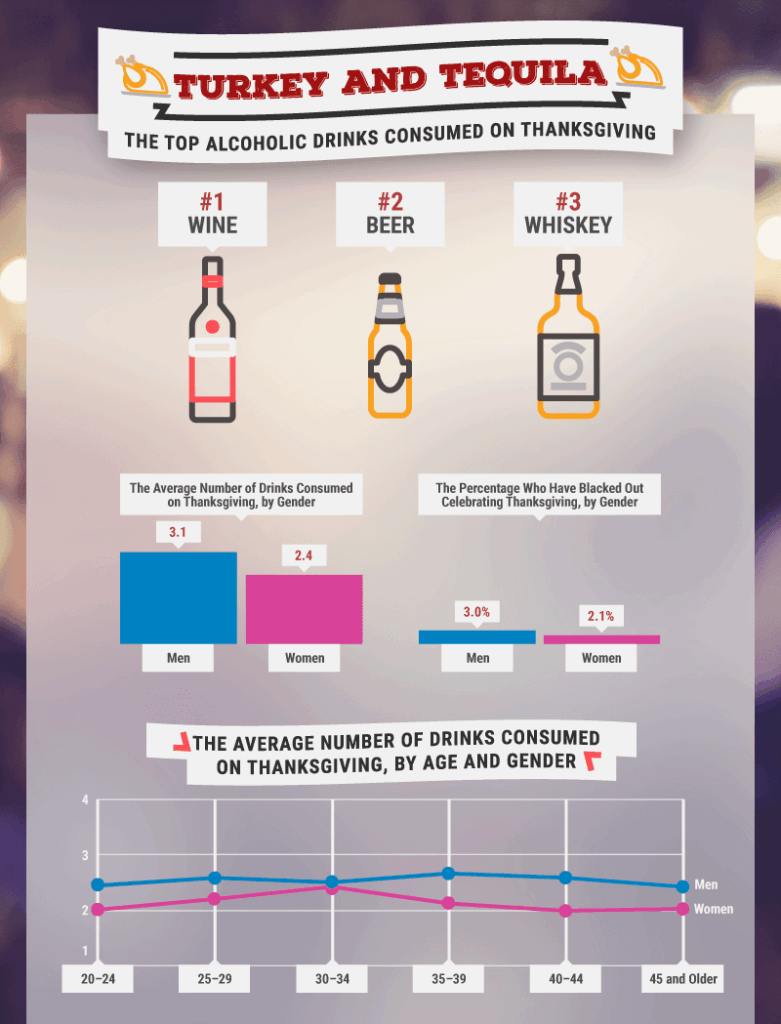
Source: https://alcohol.org/guides/booziest-holidays/
The Thanksgiving Liquor Ratio
A typical Thanksgiving follows a consistent drinking pattern:
- 52–57% wine
- 30–36% spirits
- 8–12% beer
- And around 5% non-alcoholic options.
This ratio barely changes across regions or generations, which is why wine sells out first and beer often gets overbought.
Wine dominates because the Thanksgiving plate is complex. Turkey, herbs, salt, fat, acidity, sweetness, and roasted flavors all appear at once. Wine’s acidity and aroma structure handle these contrasts better than beer or spirits, making it the most dependable match for the full meal.
Thanksgiving also has three wines that dominate every year.
- Pinot Noir
- Unoaked Chardonnay
- Sparkling wine, often Prosecco or American Brut
These wines succeed because they are flexible, aromatic, food friendly, and refreshing. They also handle fat, herbs, acidity, and sweetness in a balanced way. If you want a deeper look at how fall drinking preferences shape holiday choices, you can explore our guide on preparing for fall liquor trends before holiday prices rise.
Non alcoholic drinks also deserve attention. Sparkling apple cider remains the number one non alcoholic Thanksgiving drink year after year because it feels festive and pairs well with both savory and sweet dishes.
A Complete Thanksgiving Liquor Shopping List
A Fully Realistic, Consumption Based Plan
To build a reliable shopping list, this guide applies the holiday ratio used by beverage consultants and hospitality planners, the one drink per hour consumption model, and the average event length. These quantities cover arrival drinks, meal drinks, and evening drinks without waste.
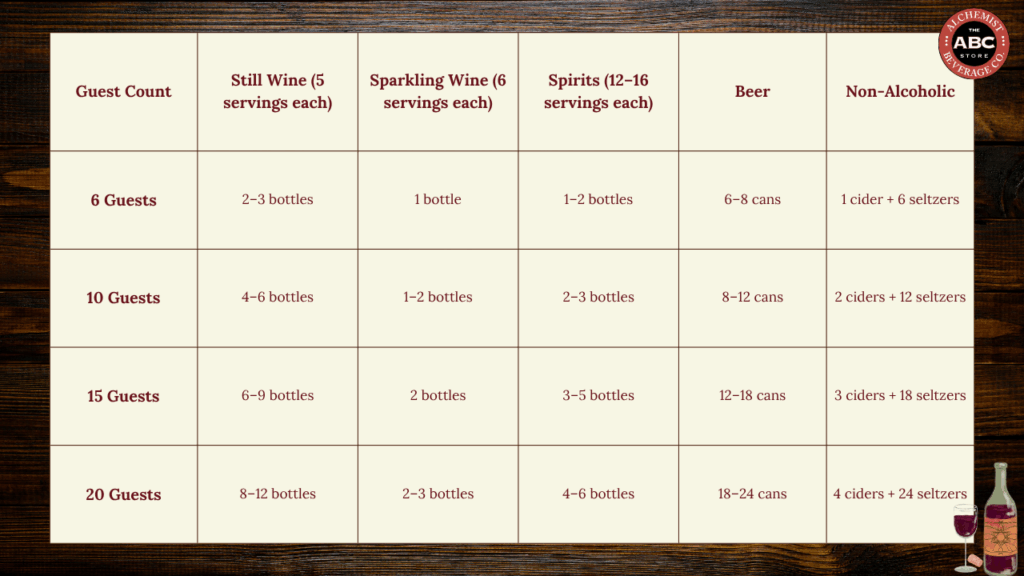
This list works for traditional family Thanksgiving and modern Friendsgiving because it balances wine, spirits, beer, and non alcoholic options across the full day.
Why These Quantities Work
A Deeper Look for Hosts Who Want Precision
Thanksgiving drinking behavior is predictable because the holiday follows a consistent timeline. Most guests arrive hungry, excited, and ready to settle in. They sip something light during the cooking window. They drink the most during the meal. They slow down afterward.
- Arrival drinking typically lasts one to two hours
- Dinner drinking lasts one hour
- Evening drinking lasts one to two hours
When these blocks combine, you reach the four to six hour range.
Wine takes up most consumption because it pairs best with food. Sparkling wine is ideal for arrival and dessert. Spirits fill gaps when guests want something different or prefer cocktails.
Beer remains a small but important category. It rarely becomes the main drink because it competes with rich food, but it is still necessary for guests who prefer beer over wine or spirits.
Non alcoholic quantities are essential. Every Thanksgiving includes guests who prefer NA drinks, are pacing themselves, or want something festive without alcohol. Sparkling cider and seltzers are always reliable.
This model ensures no one runs short during dinner and no one is stuck with unused bottles left over after the holiday.
The Most Popular Thanksgiving Drinks and Why People Choose Them
Thanksgiving wines deserve extended explanation because wine dominates the meal and shapes the overall experience.
- Pinot Noir
Pinot Noir is the centerpiece of Thanksgiving red wine. It works because it is light enough for poultry yet structured enough for herbs. Its acidity handles salt. Its berry flavors match cranberry sauce. It offers elegance without overwhelming the plate. - Unoaked Chardonnay
This is the most reliable white wine for Thanksgiving. It brings texture, freshness, and orchard fruit character. Oak aged Chardonnay often conflicts with herbs and sweet dishes, but unoaked Chardonnay supports them. - Sparkling Wine
Sparkling wine is the most versatile Thanksgiving drink. It welcomes guests, refreshes the palate, pairs with heavy dishes, and works with dessert. Prosecco and American Brut are the two most popular choices.
Spirits have a different purpose on Thanksgiving.
- Old Fashioned
It is warm, seasonal, and fits the fall mood. Bourbon cooperates with spices like cinnamon, nutmeg, and clove. It also works well for late evening sipping. - Vodka with cranberry
This drink is quick, seasonal, and easy to prepare. Hosts can batch it in pitchers during arrival. - Spiced rum
Spiced rum works with cider, ginger ale, and cola. It complements sweet potatoes, desserts, and pre meal snacks.
Sparkling apple cider remains the leading non alcoholic option. It tastes seasonal, feels celebratory, and pairs well with both savory and sweet items.
For more choices, explore the 18 Most Popular Thanksgiving Drinks.
The Thanksgiving Wine Strategy That Guarantees a Seamless Meal
Thanksgiving dishes fall into multiple categories at once. They are savory, sweet, herb heavy, earthy, salty, creamy, and rich. Spirits are too strong for these combinations. Beer struggles with fat and herbs. Wine handles them well.
Sommeliers and beverage directors rely on a simple wine ratio to keep Thanksgiving meals balanced across complex flavor profiles..
- 40% White Wine
- 40% Red WIne
- 20% Sparkling Wine
This ratio guarantees that everyone finds something they enjoy. It also ensures guests can switch between varieties depending on their plate.
If you are hosting a larger group, consider buying wine by the case. Case buying provides consistent bottles, improves savings, and prevents last minute shortages. You can also review a detailed guide on buying wine by the case to decide whether it is the right strategy for your Thanksgiving gathering.
The Complete Thanksgiving Food and Drink Pairing Guide
A Sommelier Level Breakdown
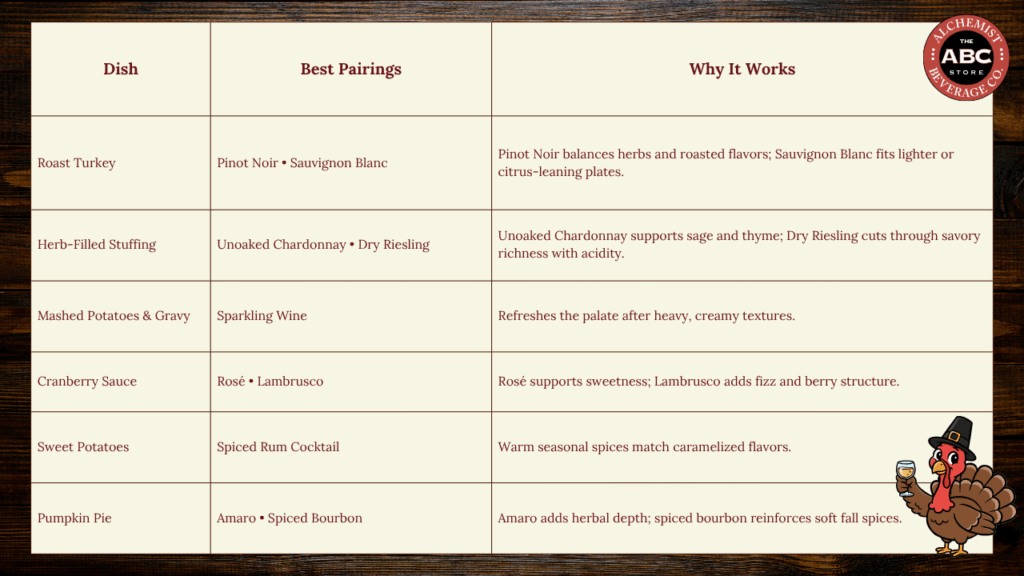
The Thanksgiving Timeline Framework
How to Plan Thanksgiving Drinks From Start to Finish
This is one of the most valuable parts of the guide because it eliminates chaos.
- Arrival Window
Guests arrive at different times. Offer an easy drink that requires no thought. Sparkling wine works best. A pitcher of a simple cocktail also works. - Cooking Window
Guests gather around the kitchen. Light drinks, cider, sparkling water, or wine spritzers are ideal. - Pre Dinner
This is often the most active drinking period. Sparkling wine and light cocktails shine here. - Dinner
Wine dominates the table. Pinot Noir, unoaked Chardonnay, sparkling wine, and rosé are the foundation. - Dessert
Guests either want something sweet, something bitter, or something light. Amaro, bourbon, sparkling wine, or cider work well. - Evening
This is the slowest drinking period. Many switch to coffee, tea, cider, or spirits for relaxed sipping.
The timeline gives you a complete structure for your beverage plan.
Batch Cocktail Recipes for Thanksgiving
High Impact, Low Effort, Crowd Pleasing Cocktail Recipes Options
- Cranberry Bourbon Punch
Bourbon
Cranberry juice
Orange slices
Cinnamon sticks
Sparkling water - Apple Cider Sangria
White wine
Cider
Pear slices
Cinnamon
Fresh rosemary - Thyme and Pear Spritz
Vodka
Pear juice
Lemon
Thyme
Soda water - Pumpkin Spice Old Fashioned
Bourbon
Allspice syrup
Orange zest - Ginger Apple Cooler
Vodka
Ginger beer
Apple juice
Lime
These cocktails can be prepared in pitchers or dispensers to reduce pressure on the host.
Non Alcoholic Thanksgiving Strategy
A Complete Guide for Inclusive Hosting
Not every guest drinks alcohol, and even regular drinkers often choose to pace themselves during long holiday gatherings. A complete Thanksgiving beverage plan includes NA options that feel equally festive.
- Sparkling apple cider
- Ginger beer
- NA wine
- Fruit infused water
- Warm apple spice mocktail
- Cranberry and rosemary spritzer
Provide these options in the same serving format as alcoholic drinks so guests feel included.
Budget Based Thanksgiving Liquor Guide
Smart Choices for Every Price Point
- Affordable Liquor Tier
Prosecco
Domestic Chardonnay
California Pinot Noir
Simple bourbon
Vodka
Basic cider
- Mid Liquor Tier
American Brut
Oregon Pinot Noir
Unoaked French Chardonnay
Small batch bourbon
- Premium Liquor Tier
Grower Champagne
Carneros Chardonnay
Willamette Valley Pinot Noir
Barrel aged rum
High end bourbon
This structure helps hosts match selection to their budget.
Leftover Liquor Strategy
How to Manage Leftover Liquor?
- Wine
Red wine lasts two to three days.
White wine lasts three to four days.
Sparkling wine lasts one day unless sealed with a sparkling stopper.
- Spirits
Bourbon, rum, and vodka last indefinitely when stored properly. - Beer
Cans last several months. - Cider
Consumed within one to two days.
Troubleshooting Guide
For When Thanksgiving Does Not Go to Plan
- If you run out of wine, Open sparkling. It pairs universally.
- If guests arrive with extra bottles, Use them for the evening window.
- If a dish is too salty, Serve sparkling wine or rosé.
- If you misjudged beer demand, Offer cider or ginger beer.
- If spirits run low, Switch to simple spritzers or wine forward drinks.
Bringing It All Together
Thanksgiving liquor planning becomes easy when you follow a data driven, guest centered, timeline based framework. The model in this guide works for families, Friendsgiving groups, mixed groups, large gatherings, and small groups.
This guide gives you a quantity framework, pairing logic, cocktail structure, non alcoholic plan, and complete hosting strategy. It takes the guesswork out of the holiday and replaces it with a plan that works in every real world scenario.
A Complete Shopping Experience in One Place
The ABC Store curates a complete holiday-ready selection, built from years of understanding what Charleston hosts buy most during the Thanksgiving season. Pinot Noir, unoaked Chardonnay, Prosecco, American Brut, bourbon, spiced rum, vodka, seasonal mixers, cider, seltzers, and non alcoholic options are available across all three Charleston locations.
Visit the West Ashley Crossing store or either Mt Pleasant location to prepare for a complete holiday beverage experience that supports the entire day from arrival to dessert.